
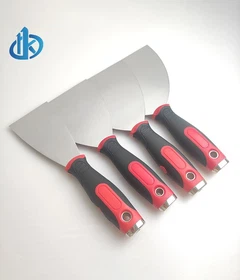
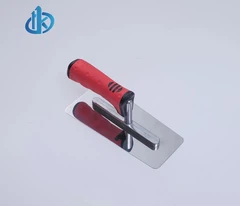
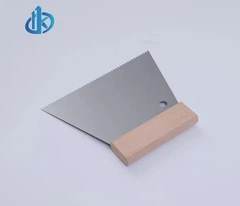



Direct Supply from Chinese Manufacturer | Professional Manual Tools Guide on Trowel Notch Differences
In tile installation, workers often ask, "What's the difference between trowel notches?" The shape and size of a trowel notch directly affect adhesive spread and tile adhesion.
Choosing the right notch is a crucial step to ensure construction quality. Hanke Tools, as a professional manual tool manufacturer, leverages years of manufacturing experience to provide high-quality trowels for construction sites.
Shallow notched trowels are typically suitable for small or thin tiles. They allow even adhesive application while minimizing waste, making operation more flexible and efficient.
For medium to large tiles, deeper notched trowels are recommended. The deeper notches ensure adequate adhesive thickness, allowing tiles to firmly bond to the substrate and preventing hollowing or uneven surfaces, ensuring a high-quality finish.

During construction, substrate flatness and adhesive type should also be considered. Flat surfaces can use standard notched trowels, while uneven surfaces benefit from deeper notches to ensure full adhesive coverage and improved results.
Understanding "What's the difference between trowel notches?" helps workers select the most suitable trowel for different needs. Hanke Tools' trowels feature high-quality carbon steel or stainless steel blades with precise notch depths, combined with ergonomic handles for effortless operation, suitable for various construction scenarios.
As a source manufacturer, Hanke Tools strictly controls every production step, from blade polishing to handle assembly, ensuring each tool is durable and reliable, making Hanke Tools a trusted partner for professional construction teams.


