
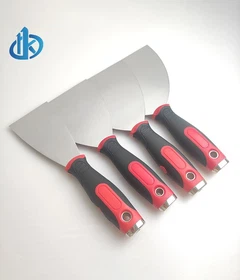



Let's cut to the chase: there's no one-size-fits-all answer, but picking the right size is like choosing the right tool for a puzzle-too big, and you'll mangle the edges; too small, and you'll be there all day.
Start small if you're dealing with details. A 1-inch or 2-inch blade is your best friend for tiny tasks: prying out old window glazing, smoothing putty around nail holes, or cleaning gunk out of the crevices of a vintage desk. I once tried using a 3-inch on a 1920s window frame, and let me tell you-those delicate wood edges didn't stand a chance. The small blade, though? It tiptoed around the corners like a pro.
Medium sizes (3 to 4 inches) are the workhorses. Think of them as the Swiss Army knife of putty knives. Need to patch a small drywall dent? Perfect. Seal gaps around baseboards? They've got your back. I keep a 3-inch in my garage and another in the kitchen drawer-you'd be surprised how often a rogue splatter of paint or a glob of caulk needs taming, and this size hits that sweet spot between precision and coverage.
Go big (5 inches or more) when you're tackling scale. Stripping wallpaper? Scraping off a layer of old paint from a wall? Smoothing out a fresh coat of joint compound? A large blade spreads pressure evenly, so you won't leave streaks or miss spots. Just remember: big blades are unwieldy in tight spaces. I tried using a 6-inch to fix a bathroom tile gap once, and it felt like trying to stir coffee with a shovel.
So, the secret? Get a set. Start with a 2-inch for the nooks, a 3-inch for everyday fixes, and a 5-inch for the big jobs. Your hands (and your projects) will thank you.


