
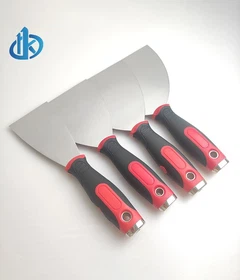


Okay, let's be real-there's no "one size fits all," but I'll save you from buying 10 knives (I've done that). Let's break it down by what you're actually doing.
First, the tiny guys: 4-inch and 6-inch. These are your "detail heroes." Filling nail holes? Patching dents from moving a couch? Getting into tight corners where walls meet? Grab one of these. I use a 4-inch for nail holes-if I tried a big knife, I'd have compound all over the wall, not just the hole. Total waste. And 6-inch is perfect for small seams, like around outlets-super easy to control.
Next, the workhorses: 8-inch and 10-inch. These are for the main seams-y'know, the big gaps between drywall panels. When you're embedding that tape into compound, 8 or 10 inches is just right. Wide enough to press tape evenly (no ridges!), but small enough to move along the seam without smearing goop everywhere. I swear by my 10-inch-one smooth pass, tape's stuck. Tried an 8-inch for a long wall? Took twice as long. Not worth it.
Then the big boys: 12-inch, 14-inch, 16-inch. These are for final coats-when you want the seam to disappear. If you use a small knife here, you'll get a bumpy edge that's obvious after painting. Big knives spread compound wider, so the transition's invisible. I use 12-inch-14-inch is too heavy for me, but if you're doing tall walls, it'll save your arm. My cousin used a 10-inch for final coats? His walls had speed bumps. Yikes.
Rule of thumb: Start with 6-inch + 10-inch. That covers 90% of projects. Add 4-inch later for details, 12-inch for big rooms. Easy peasy.
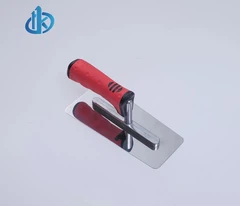
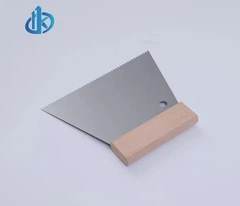
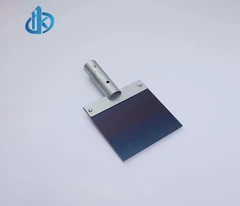
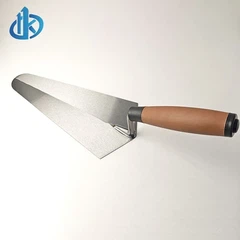
taping knife from hanke tools


