
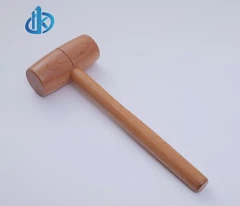


In the field of architectural decoration, some traditional tools have always played unique and indispensable roles, and the wooden mallet is one of them.
Recently, with the rise of the retro trend in architectural decoration, the application of wooden mallets in many projects has attracted increasing attention.
In the restoration work of ancient buildings, the wooden mallet is an indispensable helper for craftsmen.
For example, when restoring traditional wooden carved doors and windows, for the mortise and tenon structural parts that have become a bit loose over the years but need to be accurately positioned, gently tapping with a wooden mallet can not only make the parts fit accurately with its moderate impact force, but also won't damage the wooden structure like using a metal mallet due to its overly hard texture.
Professional restoration craftsmen said that the gentle and just-right control of force brought by the wooden mallet is one of the key elements to ensure the high-quality completion of the restoration work.
At the same time, the wooden mallet also has its uses in some new architectural decoration projects that focus on a natural and rustic style.
For instance, when creating a wooden wall decoration, workers need to piece together carefully selected wooden boards one by one.
At this time, using a wooden mallet to knock the boards firmly to make them fit more closely can create a wall effect with a stronger sense of integrity and texture.
Moreover, the relatively quiet sound when the wooden mallet strikes also fits the decorative scenes that pursue a quiet and natural atmosphere.
In addition, during the production process of some small wooden carving handicrafts that adorn the architectural decoration space, woodcarving masters can hardly do without the wooden mallet.
It can assist the masters to adjust the shape of the wooden carvings more delicately and present the carving details more perfectly.
However, some experts in the industry also pointed out that although the wooden mallet has many application scenarios, with the development of modern power tools and so on, the proficiency of some practitioners in using it has declined to some extent.


Therefore, the current architectural decoration industry is also calling for strengthening the inheritance and training of the skills in using traditional tools, so that the wooden mallet and others can continue to play their values at the appropriate times and help create more architectural decoration works with unique charm.


