
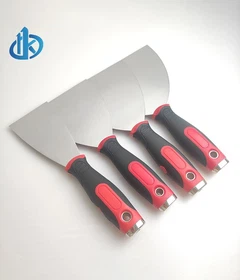
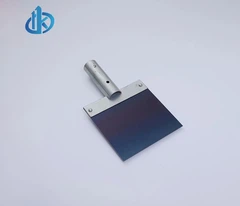

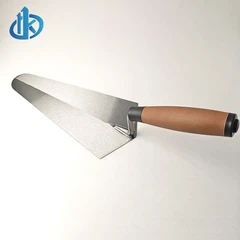

It depends on what you're doing-neither is "better" overall, but each is better for specific jobs. Let me break down when to choose hollow ground vs. flat blade, so you can pick the right one for your project.
Choose a hollow ground putty knife if:
You're spreading joint compound (drywall mud). This is its superpower-its curved edge spreads compound evenly, leaves a smooth finish, and cuts down on sanding. If you're doing any drywall work (patching seams, hanging drywall), hollow ground is a no-brainer.
You're working with thick materials (like wood putty or heavy spackle). The hollow edge lets the material sit in the curve, so you can spread it without clumps or streaks. I use mine for filling deep scratches on wood furniture-works way better than a flat blade.
You need precision (like small spots or curved surfaces). The thin, flexible edge fits in tight spots (like around trim) and follows curves (like wooden chair legs) without leaving marks.
You're using it for long jobs. The flexible blade is easier on your hand-no wrist pain after spreading compound for an hour.
Choose a flat blade putty knife if:
You're doing light, simple jobs (like patching tiny nail holes). A flat blade is cheaper and works fine for spreading a little spackle on a small hole-no need for the extra precision of hollow ground.
You're scraping (like loose paint or stickers). Flat blades are stiffer than hollow ground, so they handle scraping pressure better. I use a flat blade to scrape old paint off my fence-hollow ground would bend too easily.
You're on a tight budget. Flat blade knives are usually 5−10 cheaper than hollow ground-if you only use a putty knife once or twice a year, save the money.
You're working with thin materials (like thin caulk or light spackle). Thin materials don't need the hollow curve- a flat blade spreads them just fine.
For most homeowners: if you do a lot of drywall work or furniture refinishing, get a hollow ground knife. If you only do small patch jobs and occasional scraping, a flat blade is enough. If you can afford it, keep both-they each have their place. I have one of each in my toolbox, and I reach for whichever fits the job.


