






In the construction decoration and other industries, the plastering trowel with a wooden handle is a commonly used tool.
Users often find that even if the wooden handle has been in contact with plaster for a long time, it is not easily corroded by the chemical components in the plaster. There are reasons worth exploring behind this.
Firstly, the wood used to make the wooden handle of the plastering trowel is usually carefully selected hardwood species. Such as beech and oak, this kind of wood itself has a relatively dense structure and good natural anti-erosion ability.
The internal fiber tissues are closely arranged, which can block the invasion of external substances to a certain extent. It is very difficult for the chemical components in the plaster to penetrate into it and cause damage.
Secondly, during the processing and production process, the wooden handle usually undergoes special anti-corrosion treatment procedures. For example, by soaking it in professional anti-corrosion solutions, the wood fully absorbs the protective chemicals.
These substances will form a "protective film" on the surface and inside of the wood. When it comes into contact with plaster, the components in the plaster can hardly react with it to cause corrosion in the face of this layer of protection.
Moreover, after daily use, most construction workers will clean and maintain the wooden handle in time, clean off the attached plaster, and occasionally apply some protective oil to keep the wooden handle in a relatively good condition, further enhancing its ability to resist the influence of the chemical components in the plaster.
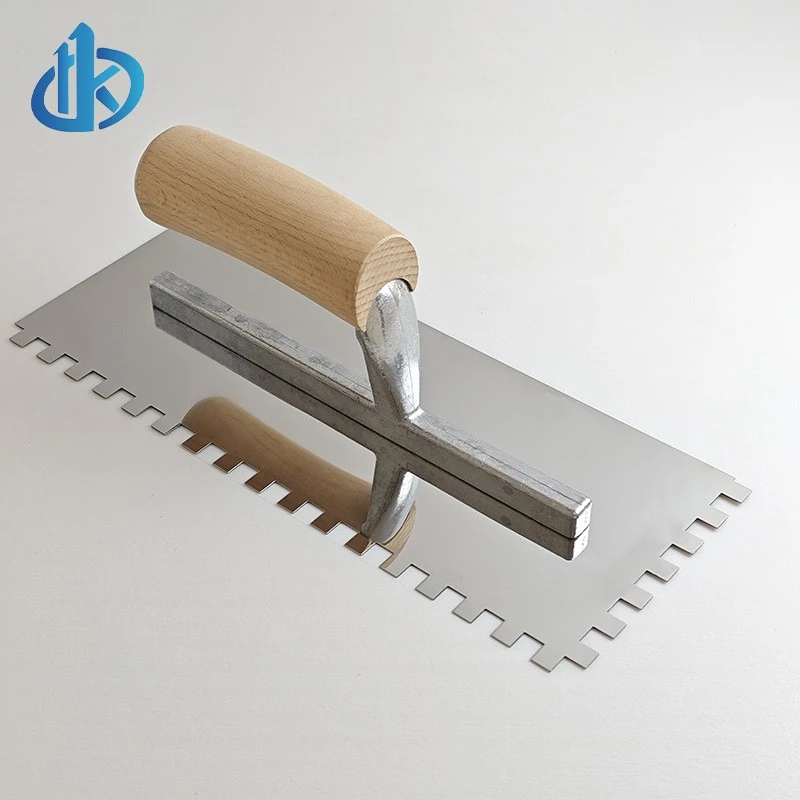

It is precisely the combined effect of these factors that enables the wooden handle of the plastering trowel to remain in good condition even when it is frequently in contact with plaster, and it can continue to play an important role in construction and other fields, and also guarantees the service life and performance of the tool.


