
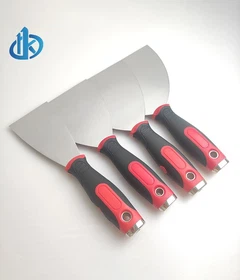
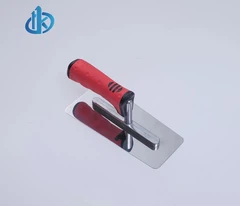
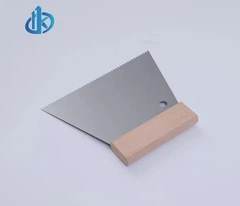
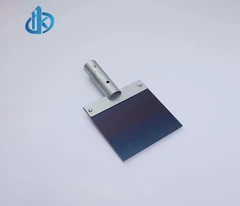

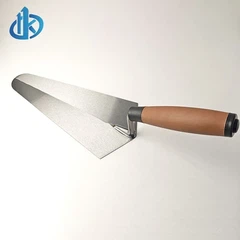

Yes, a taping knife is an ideal tool for spreading joint compound, and it is widely used in drywall installation and repair projects.
The design of a taping knife makes it perfectly suited for this task. Typically, taping knives come with a long, flexible blade attached to a handle. The flexibility of the blade allows it to conform to the contours of the drywall surface, ensuring an even spread of the joint compound. Whether you are covering drywall seams, filling holes, or feathering out the compound to create a smooth finish, the taping knife's flexibility enables you to apply the right amount of pressure and achieve a consistent layer thickness.
When using a taping knife to spread joint compound, start by scooping up an appropriate amount of compound on the blade. Then, position the knife at the edge of the area to be covered and gently push the compound across the surface. Use long, smooth strokes, applying light pressure to evenly distribute the compound. For drywall seams, place the tape over the seam first and then use the taping knife to press the tape into the compound, simultaneously spreading additional compound over the tape to ensure a secure bond and a flat surface.
One of the advantages of using a taping knife is its ability to create feathered edges. By angling the knife slightly and applying less pressure at the edges of the compounded area, you can blend the joint compound seamlessly with the surrounding drywall, minimizing visible ridges or bumps. This is crucial for achieving a professional - looking finish, especially when the surface will be painted or wallpapered.
However, it's important to choose the right size of taping knife for different tasks. Smaller taping knives, usually around 4 - 6 inches in width, are suitable for detailed work such as filling small holes or working in tight corners. Larger knives, ranging from 10 - 14 inches, are better for covering wider areas like drywall seams and for the final smoothing of larger surfaces. Also, always keep the taping knife clean during use to prevent the buildup of dried compound, which can affect the quality of the application.
In conclusion, a taping knife is an indispensable tool for spreading joint compound, providing both precision and efficiency in drywall projects.


