


Choosing a trowel size used to baffle me. I'd stand in the hardware store, staring at a wall of 6mm, 8mm, 10mm options, wondering if there was a secret code. Spoiler: There's no code, just a few simple rules. Let me break it down like I wish someone had for me.
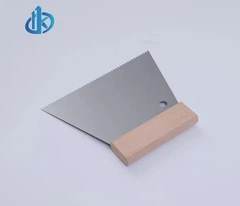
Start with tile size. Small tiles (like 10x10cm mosaics) need small trowels-6mm max. They're light and don't need much adhesive, plus their tiny surface area can't handle thick glue without oozing. Medium tiles (30x30cm to 40x40cm) do well with 8mm trowels. It's like serving a sandwich: not too much mayo, not too little.
Large tiles (50x50cm and up) are heavyweights. They need 10mm or 12mm trowels to create a thick enough adhesive bed. Think of it as giving a giant cake a thick layer of frosting-you need enough to hold it together.
Next, check the tile type. Porcelain and stone tiles are denser, so they sometimes need a bit more adhesive than ceramic. And wall tiles? They almost always need smaller trowels than floor tiles. Walls can't "hold" thick adhesive like floors can-gravity's a jerk that way.
Here's a hack: Look at the tile's back. If it's smooth, a smaller trowel might work. If it's porous or has grooves (like some natural stones), it soaks up adhesive, so size up. I learned this the hard way with travertine tiles-their porous backs sucked up 8mm adhesive like a sponge, so I had to switch to 10mm.
Finally, test. Lay one tile with your chosen trowel, then peel it up. You want 80%+ coverage on the back. If it's spotty, go bigger. If it's oozing everywhere, go smaller. It's that simple.
Our Products


