
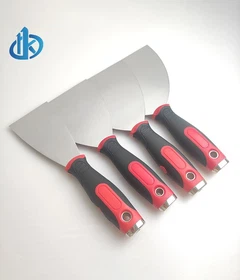
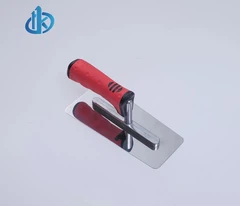
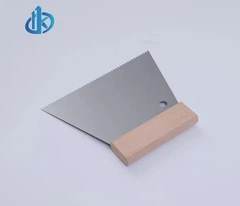



Guide to Cleaning a Mud Knife: Key Steps to Extend Its Service Life
In fields such as construction, decoration, and handicraft production, the mud knife is an indispensable tool. However, many users often neglect the cleaning and maintenance of the mud knife, resulting in a decline in the tool's performance and a shortened service life.
Mastering the correct method of cleaning the mud knife can not only ensure the construction quality but also is the key to extending the tool's service life.
The mud knife should be dealt with as soon as possible after use. While materials like mud have not completely dried and hardened, use a trowel or other tools to carefully scrape off most of the residual substances on the surface of the mud knife.
During this step, it is necessary to avoid using excessive force to prevent scratching the blade surface, which may affect the subsequent use effect. If the residual substances have already dried and hardened, the mud knife can be soaked in warm water, and then scrape them off after they are softened.

After the initial cleaning, it's time for the in-depth cleaning process. Prepare an appropriate amount of clean water and special cleaning agent in a basin, immerse the mud knife completely in it, and gently scrub the blade surface and the handle with a brush. For stubborn stains, a soft-bristled brush can be selected to avoid damaging the surface of the mud knife. When scrubbing, special attention should be paid to parts that are prone to accumulate dirt, such as the edge of the mud knife and the gaps in the handle, to ensure that there is no residue of materials. After the cleaning is completed, rinse the mud knife thoroughly with clean water to remove any remaining cleaning agent.
Drying and maintenance after cleaning are equally important. Wipe the surface of the mud knife dry with a clean towel and let it dry naturally in a well-ventilated place, avoiding direct sunlight. After it is completely dry, apply a layer of anti-rust oil or Vaseline on the surface of the mud knife, especially on the blade surface and metal parts, which can effectively prevent rusting and keep the mud knife sharp and flexible. Store the mud knife properly in a dry and safe environment to prevent it from being collided or squeezed.
Regular and correct cleaning of the mud knife can not only maintain the good performance of the tool but also improve the construction efficiency and quality. For construction workers, decorators, and handicraft enthusiasts, mastering the cleaning techniques of the mud knife is an important part of maintaining the quality of the tool and ensuring the smooth progress of their work.


