



How to Select the Best Putty Knife? Professionals Reveal the Answers for You
In renovation, repair, and various handicraft projects, the putty knife is an essential tool. From filling wall cracks and applying putty to installing decorative trims, the quality of its performance directly affects work efficiency and the final outcome.
However, when faced with a wide variety of putty knife products on the market, which one is the best choice? Let's take an in-depth look at the key elements for selecting a high-quality putty knife.
The material of the blade is a core factor determining the performance of a putty knife. High-carbon steel blades stand out for their excellent strength and durability. They can not only easily handle hard materials but also are not prone to deformation or wear after long-term use, making them suitable for dealing with a large amount of heavy workload.
Stainless steel blades are known for their rust resistance and corrosion resistance, especially suitable for working in humid environments, which can prevent the blades from rusting and affecting the quality of putty application.
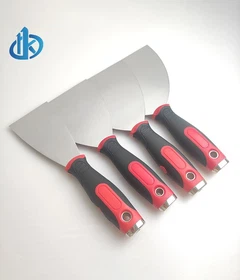
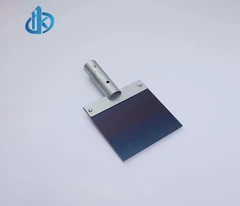
The size of the blade needs to be selected according to specific working scenarios. Small putty knives, such as those with a width ranging from 25 mm to 50 mm, are convenient for working in narrow spaces or handling detailed tasks, like repairing cracks in wall corners and carving decorative trims.
Medium-sized putty knives (with a width of 75 mm to 125 mm) have a wide range of applications and are commonly used for applying putty over large areas of walls and repairing floors. Large putty knives (with a width of more than 150 mm), on the other hand, are suitable for quickly covering large areas, significantly improving construction efficiency.

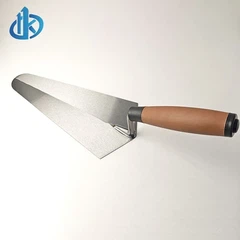
The design of the handle is related to the user experience and work efficiency. An ergonomic handle conforms to the curve of the palm, effectively distributing the pressure when applying force and reducing hand fatigue caused by long-term operation.
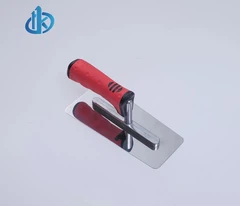
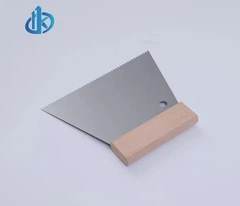
Handles made of rubber material have excellent anti-slip properties, allowing for a firm grip even when the hands are sweaty or stained with putty. Wooden handles, on the other hand, offer a warm texture and have a certain shock-absorbing effect, making it less likely for the hands to feel numb after long-term use.
In addition, the connection method between the blade and the handle should not be overlooked. Putty knives that are firmly fixed using riveting, injection molding, or welding processes are less likely to have the blade fall off under greater pressure compared to products that are simply glued, making them safer and more reliable to use.
Overall, there is no one-size-fits-all answer to the selection of the best putty knife. Instead, it is necessary to make a trade-off based on the actual usage scenarios, work intensity, and personal preferences.
By paying attention to key elements such as blade material, size, handle design, and connection process, you can select a high-quality putty knife that suits you well and provides a strong guarantee for the smooth completion of various projects.


