
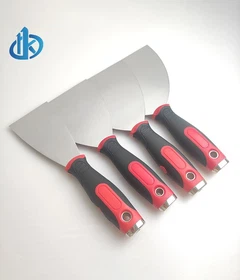
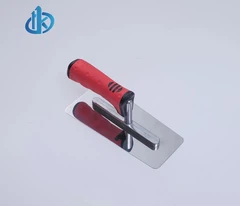
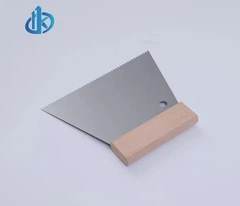

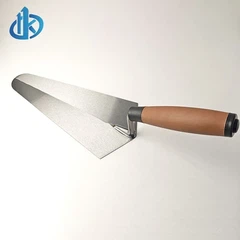

In the field of architectural decoration, decorative plaster patterns are becoming increasingly popular due to their unique artistic beauty. And the plastering trowel plays an indispensable role in creating these special patterns and is now becoming the focus of attention in the industry.
Recently, the wonderful "magic" of the plastering trowel has been demonstrated in many indoor and outdoor decoration projects.
During the production process, experienced craftsmen first prepare the plaster materials according to the design requirements, ensuring that the texture is uniform and the viscosity is appropriate. Then, they pick up plastering trowels of various shapes and start to create.
For example, if you want to create a pattern with wave textures, craftsmen will choose a plastering trowel with an arc.
By flexibly pushing and smearing it repeatedly on the wall surface, the arc of the trowel, just like a paintbrush, can outline the undulating wave shapes of the plaster, making them look natural and smooth.
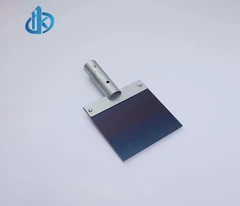
If geometric patterns such as diamonds and squares are to be made, a square plastering trowel with regular edges can come in handy. Craftsmen can precisely control the angle and direction of the trowel to smear the plaster into neat and beautiful geometric shapes.
Moreover, some carved plastering trowels can even create three-dimensional and delicate pattern effects. Craftsmen dip an appropriate amount of plaster with such trowels and then gently press and carve.
The originally plain wall surface can instantly present vivid carved patterns such as flowers and leaves, adding a strong artistic atmosphere to the space.


Industry insiders said that as the decorative requirements continue to increase, the craftsmanship of plastering trowels is also constantly innovating. More and more trowels with unique shapes are being developed, helping to create a wide variety of plaster patterns and pushing the decoration industry towards a more creative and artistic new stage.


