
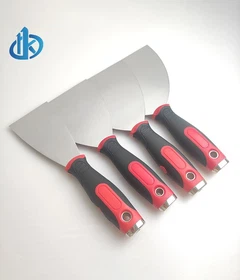
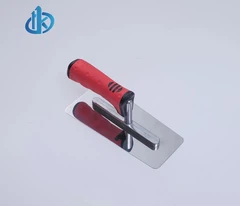
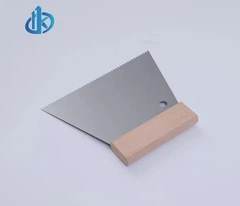
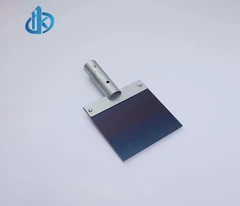

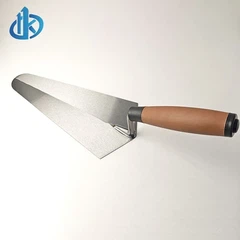

There are several models of stainless steel blades available for putty knives, each designed to meet different user needs and application scenarios.
One common model is the flexible blade putty knife. This type of blade is thin and has a certain degree of flexibility. It is ideal for applying putty in a smooth and even layer, especially on curved or uneven surfaces. The flexibility allows the blade to conform to the shape of the surface, ensuring a seamless finish. It is often favored by DIY enthusiasts and professionals alike for tasks such as wall patching and skim coating.
Another model is the stiff blade putty knife. These blades are thicker and more rigid, providing greater strength and durability. They are better suited for heavy-duty scraping jobs, like removing old paint, wallpaper, or other tough materials from surfaces. The stiffness of the blade allows for more efficient and forceful scraping without the blade bending or warping easily.
There are also putty knives with serrated edges on the stainless steel blade. These serrations can be useful for roughening up surfaces before applying putty, enhancing the adhesion of the material. They can also be used for more aggressive scraping in cases where a regular smooth blade might not be sufficient.
In addition, some putty knives come with a tapered blade. The tapered design allows for more precise work in tight corners and edges, providing better control and access to hard-to-reach areas. Whether it's for detailed trim work or getting into the nooks and crannies of a surface, the tapered blade model offers enhanced versatility.
Overall, the variety of models of stainless steel blades for putty knives ensures that users can select the most appropriate tool for their specific project requirements, whether it's a small home improvement task or a large-scale construction project.
Products Display


