
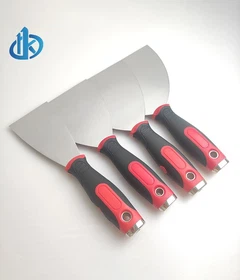
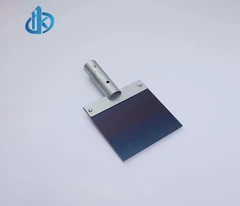

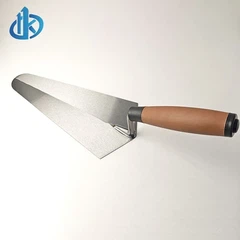

A fully-automatic polishing machine offers an efficient and precise way to polish putty knives, enhancing their appearance and performance.
The process commences with the loading of the putty knives onto a conveyor or a specialized fixture within the machine. The knives are carefully positioned to ensure that the surfaces to be polished are accessible to the polishing mechanisms. Once loaded, the machine's sensors detect the presence and orientation of the putty knives.
The polishing operation then begins. The machine is equipped with multiple polishing heads, each fitted with abrasive belts or discs of varying grits. Initially, a coarser abrasive is used to remove any surface imperfections, scratches, or burrs on the putty knife. As the conveyor moves the knives forward, the polishing heads rotate at high speeds and apply consistent pressure to the blade surfaces.
During the polishing process, the machine continuously monitors and adjusts the pressure, speed, and the position of the polishing heads to ensure an even and uniform finish. This automated control system is crucial in achieving a high-quality polish without over-polishing or causing damage to the putty knife.
After the initial rough polishing, the machine automatically switches to finer abrasives for the final polishing stage. This step further smoothens the surface, giving the putty knife a shiny and smooth finish, ready for use.
Finally, the polished putty knives are unloaded from the machine, either manually or through an automated ejection system. The entire process is not only faster but also more consistent compared to manual polishing methods, making it ideal for large-scale production of putty knives where quality and efficiency are of utmost importance. Overall, the fully-automatic polishing machine streamlines the polishing process and significantly improves the overall quality of the putty knives.


