
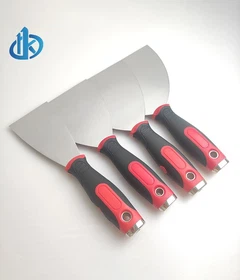
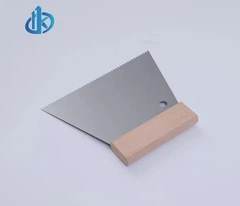
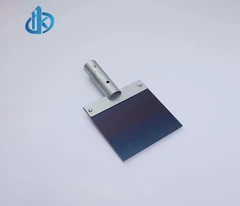

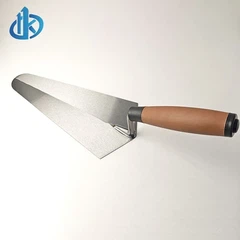

To ensure the accuracy of the humidity test for the wooden handles of putty knives, several key steps must be followed.
Firstly, proper sample selection is essential. Choose putty knives with wooden handles that are representative of the production batch. Inspect them thoroughly for any pre-existing damage or irregularities, such as knots, cracks, or uneven finishes. Only samples in their original, untreated state should be used to avoid false results.
The testing environment setup is crucial. Use a high-quality humidity chamber that can accurately control both relative humidity and temperature. Calibrate the chamber regularly to maintain precision. Set the relative humidity within the recommended range of 70% to 95% and the temperature at around 25°C to 35°C. Ensure the chamber has proper air circulation to guarantee uniform exposure of all samples.
During the test, placement of the putty knives matters. Space them evenly inside the chamber, making sure they do not touch each other or the chamber walls. This prevents any interference in moisture absorption and ensures each handle is exposed to the same humid conditions.
Regular monitoring and inspection are necessary. Check the chamber's parameters frequently to confirm they remain stable. At specific intervals, visually inspect the wooden handles for signs of swelling, warping, cracking, or discoloration. Use calibrated measuring tools, like calipers, to accurately record any dimensional changes.
Finally, the evaluation process must be standardized. Follow established industry criteria for determining whether the handles have passed or failed the test. Have trained technicians conduct the inspections and record the results meticulously. By meticulously adhering to these steps, manufacturers can have confidence in the accuracy of their humidity tests, leading to better quality control and improved putty knife products with durable wooden handles.


