
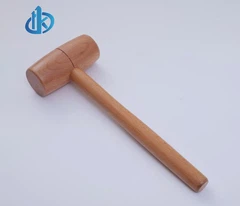


Oh, 100%-wooden hammers are way safer for beginners than metal ones. When you're just starting out, you're still learning how to control your taps, how to aim, and how much force to use. A metal hammer can be unforgiving-one wrong move, and you're looking at a broken project, a chipped chisel, or even a hurt hand. But a wooden hammer? It's like training wheels for your toolbox-gentle, forgiving, and way less likely to cause trouble. Let me break down why it's the best choice for newbies.
First, it's harder to over-tap. Beginners often hit too hard-we're nervous, we want the job done fast, so we swing harder than we need to. A metal hammer will take that extra force and smash the wood, bend the nail, or split the chisel handle. But a wooden hammer? It has give. If you hit too hard, the wood absorbs some of the impact, so the damage is minimal. I remember my first time using a chisel-I hit it way too hard with a wooden hammer, and instead of splitting the wood, it just made a soft thud. I laughed, adjusted my force, and tried again. If I'd used metal, that piece of wood would've been toast.
Then, there's less risk of slipping or bouncing. Metal hammers are heavy, so when you tap, they can bounce off the wood or chisel-sending the hammer (or the chisel) flying. That's dangerous, especially if you're new and not used to controlling the tool. Wooden hammers are lighter, so they don't bounce as much. They stay where you tap them, so you're less likely to miss and hit your hand or the wrong part of the project. My cousin started woodworking last year, and she was terrified of metal hammers-too heavy, too bouncy. I gave her a small beech wooden hammer, and within a week, she was tapping joints like a pro. No slips, no bounces, no fear.
It's also more forgiving of mistakes. Beginners make mistakes-we misaim, we tap the wrong spot, we forget to hold the chisel straight. A wooden hammer softens those mistakes. If you tap the edge of the wood instead of the joint, it won't leave a big dent. If you hit the chisel handle at an angle, it won't crack. I made so many mistakes when I started, but my wooden hammer kept me from getting frustrated. I could learn without ruining every project, which made me want to keep going.
And let's talk about confidence. When you're a beginner, using a tool that feels safe and easy to control makes a huge difference. A metal hammer can feel intimidating-like holding a weapon. A wooden hammer feels friendly-warm, light, easy to hold. It makes you feel like you know what you're doing, even when you don't. That confidence helps you learn faster, try new things, and not give up when things go wrong.
So if you're a beginner, skip the metal hammer. Grab a small, light wooden hammer (beech is perfect) and start there. It'll keep you safe, help you learn, and make woodworking (or leather crafting, or any craft) way more fun. Trust me-every experienced woodworker I know started with a wooden hammer. It's the best way to learn.
wooden hammers from hanke tools


