
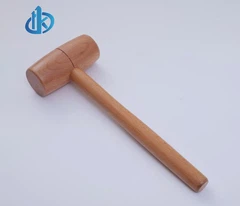


In a world of power tools and fancy metal gadgets, you might wonder why craftsmen still reach for wooden hammers. But here's the truth: wooden hammers do things that metal (or plastic) can't. They're not just "old-fashioned"-they're practical, reliable, and perfect for the work craftsmen do. Let me tell you the real reasons they're still a staple in every shop.
First, they're gentle on materials-and craftsmen care about their work. Whether you're a carpenter, leatherworker, or even a potter, you don't want to damage your project. A metal hammer can dent wood, scratch leather, or crack clay. But a wooden hammer? It delivers force without ruining the material. I'm a carpenter, but I have a friend who's a potter-she uses a small wooden hammer to tap clay into shape. If she used metal, the clay would crack; with wood, it's smooth and even. Craftsmen don't just build or create-they want their work to look good, last long, and feel special. Wooden hammers help with that.
Then, they offer control that metal can't. Craftsmen need precision-fitting a tight joint, setting a tiny rivet, or carving a delicate notch. Metal hammers are heavy and bounce, making it hard to get precise taps. Wooden hammers are lighter, have give, and let you feel exactly how much force you're using. Last week, I was fitting a tiny dovetail joint on a jewelry box-if I'd used a metal hammer, I would've over-tapped and split the wood. But with my wooden hammer? I tapped gently, felt the joint slide into place, and it was perfect. Control means less mistakes, and less mistakes mean better work. That's why craftsmen stick with wood.
They're also durable and low-maintenance. A good wooden hammer lasts decades-way longer than some cheap metal hammers that rust or break. And maintenance? Just oil the handle every few months. No need to worry about rust, or batteries, or parts breaking. My grandpa was a craftsman, and I use his wooden hammer today-it's 50 years old, and it works as well as the day he bought it. Craftsmen don't want to replace tools every year-they want tools that grow with them, that become part of their process. Wooden hammers do that.
And let's not forget the feel. There's something about holding a wooden hammer-warm, natural, not cold or slippery like metal. It fits in your hand, it balances well, and it doesn't tire your arm out after hours of work. Craftsmen spend hours in their shops-comfort matters. I can use my wooden hammer all day without my wrist aching; if I used a metal one, I'd be sore by lunch.
At the end of the day, craftsmen use wooden hammers because they work. They're not stuck in the past-they're using a tool that's stood the test of time, because it's better for their work. You can have all the fancy tools in the world, but sometimes the simplest one is the best.
wooden hammers from hanke tools


