
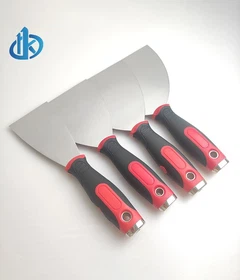

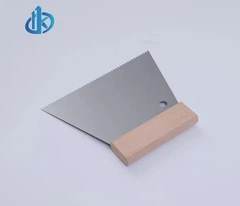




In the realm of construction and masonry, the finishing trowel is a tool that holds significant importance. But what exactly is a finishing trowel used for?
A finishing trowel, typically made of durable materials such as stainless steel or carbon steel, is a flat-bladed instrument. Its primary purpose lies in the final stages of plastering, stucco work, and concrete finishing. When it comes to plastering, after the initial layers of plaster have been applied and leveled with broader tools, the finishing trowel steps in. It is used to create a smooth, seamless, and highly polished surface. The plasterer carefully glides the trowel over the semi-set plaster, removing any minor imperfections, ridges, or tool marks. This results in a wall or ceiling with a professional and aesthetically pleasing finish, ready to be painted or left as is.
In stucco work, the finishing trowel is essential for achieving the desired texture and appearance. It can be used to create a variety of finishes, from a smooth, sleek look to a more textured. By manipulating the angle and pressure of the trowel, craftsmen can add unique design elements to the exterior or interior stucco, enhancing the overall curb appeal or interior décor.
For concrete finishing, especially in areas where a refined surface is required, such as in decorative concrete patios or indoor concrete floors, the finishing trowel is indispensable. It helps to compact the surface, close any pores, and bring out the natural shine of the concrete. This not only improves the durability of the concrete but also gives it a luxurious and finished look.
Moreover, a finishing trowel is also used in patching and repair work. Whether it's fixing small holes or cracks in plastered walls or smoothing out imperfections in concrete surfaces, its precise blade allows for accurate and neat repairs.
In conclusion, the finishing trowel is far more than just a simple tool. It is a key instrument in the hands of skilled craftsmen, enabling them to transform rough and unfinished surfaces into works of art. Its versatility and ability to create a polished finish make it an essential component in a wide range of construction and renovation projects.


