
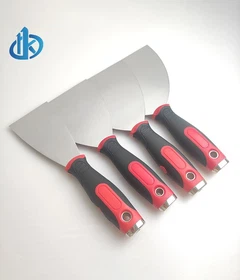
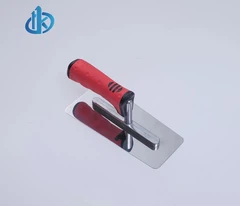
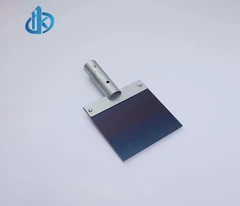

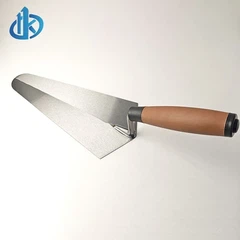

Imagine a magician waving a wand to make a rough surface disappear-that's essentially what a floating trowel does, but for concrete. This tool is the unsung hero of finishing work, stepping in when the concrete is still soft but starting to set, like a baker smoothing frosting on a cake just before it firms up.
What sets it apart? Its blade is broader and thinner than a standard trowel, with a slight curve that looks almost like a tiny canoe. That curve is no accident-it lets the user "float" the blade over the concrete, pressing down just enough to push aggregate (those little stones) below the surface while bringing creamy cement paste to the top. The result? A surface so smooth, it practically shines, like a lake on a windless day.
Floating trowels are the secret behind those sleek garage floors and polished patio slabs you admire. They're used in that sweet spot between pouring and final finishing, when the concrete is firm enough to hold a shape but still malleable. Watch a pro use one: they move in wide, sweeping arcs, their body swaying slightly as if dancing with the material.
It's not just work-it's a craft. Without this humble tool, our sidewalks would be rough as sandpaper, and our basements would feel more like caves than living spaces. So next time you glide a rolling chair across a concrete floor, tip your hat to the floating trowel. It's the reason that smooth ride exists.


