
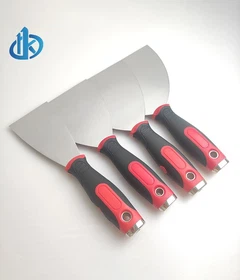
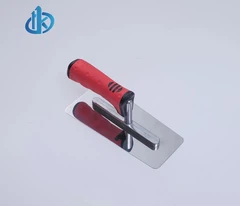
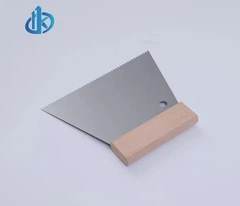
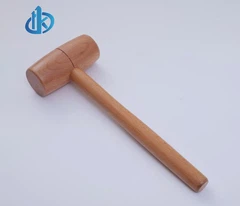
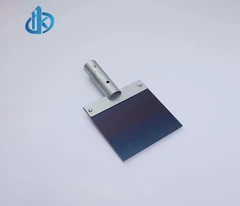

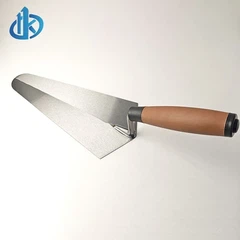

If you've ever watched a mason kneel beside a wall, their hands moving with the precision of a musician, chances are they're wielding a flat trowel. This unassuming tool, with its smooth, rectangular blade and sturdy handle, is the workhorse of the concrete and brick world. Picture a sculptor chiseling marble, but instead of stone, they're shaping mortar and cement-that's the flat trowel in action.
Bricklayers swear by it to spread mortar between bricks, ensuring each layer sticks like a well-shaken handshake. Plasterers use it to smooth wet plaster over walls, turning rough surfaces into canvases ready for paint or wallpaper. Even concrete finishers reach for it when they need to level out a fresh slab, their movements rhythmic as they glide the blade across the surface, chasing away air bubbles like a parent shooing away flies from a picnic.
What makes it so indispensable? Its flat, unbroken blade distributes material evenly, no nooks or crannies to trap excess mortar or leave lumpy patches. It's the kind of tool that feels like an extension of the hand after years of use-heavy enough to apply pressure, light enough to dance over delicate edges. Next time you walk past a construction site, listen for the shush of metal against wet concrete. That's the flat trowel, doing its quiet, crucial work, turning chaos into structure one smooth stroke at a time.


