
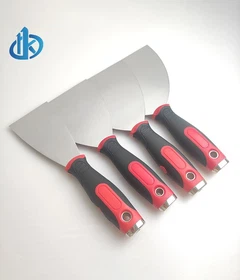
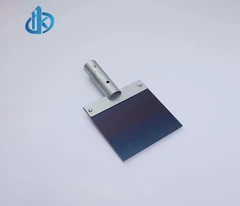

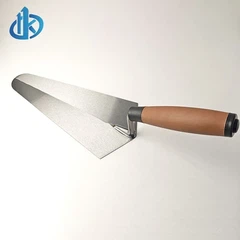

Choosing between a 10-inch and 12-inch taping knife is like picking between a scooter and a bicycle-both get you where you're going, but one's better for zipping around, and the other for covering more ground. Let's break down their superpowers.
The 10-inch knife is your go-to for mid-size missions. It's nimble enough to handle seams between drywall panels without feeling bulky, like a tennis player with a perfectly sized racket-responsive and easy to control. When you're feathering joint compound to blend into flat walls, its size lets you smooth a decent area without overreaching, keeping your strokes steady. It's also great for detail work around outlets or windows, where a bigger blade would feel like using a shovel to eat cereal. Think of it as the all-star utility player-reliable in most situations, never too much or too little.
Now, the 12-inch knife is the heavy hitter for large surfaces. When you're tackling wide swaths of wall or ceiling, this bad boy covers more territory with each swipe, cutting down on time like a lawnmower vs. a pair of scissors. Its larger surface area excels at feathering compound into ultra-smooth finishes, eliminating those tiny ridges that plague smaller blades. But here's the catch: it's a bit of a clutz in tight spots. Maneuvering it around corners or tight spaces feels like trying to park a truck in a compact spot-possible, but messy.
The real difference? It's all about scale. A 10-inch knife dances through medium jobs with grace, while the 12-inch charges through big areas with brute efficiency. Keep both in your toolbox, and you'll be ready for whatever the wall throws at you.


