



↵

What is the difference between a building trowel and a pointing trowel? - Explained
In the world of masonry, trowels come in various shapes and sizes to meet the needs of different stages of construction. Among them, the building trowel and the pointing trowel are commonly confused, though they serve very different functions and are structurally distinct.
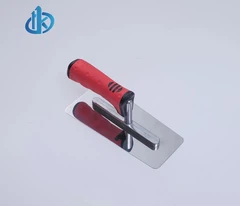
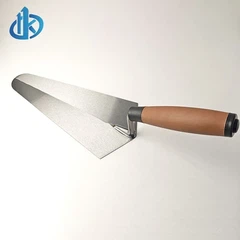
A building trowel is typically larger, with a broad and sturdy blade slightly curved at the tip. It's designed for scooping, spreading, and leveling mortar during the bricklaying process. This tool handles the bulk of the work - applying mortar directly to the brick surface to ensure solid, even joints. It is built for durability and efficiency, capable of withstanding heavy use on construction sites.
In contrast, a pointing trowel is smaller and more tapered, with a slender, sharply pointed blade. Its primary function is to fill and touch up mortar joints in already laid brickwork. It is ideal for detailed work in tight spaces where precision is key. Rather than laying mortar, it focuses on neat finishing and accurate joint work.

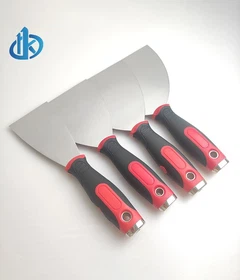
Linyi Hanke Tools Co., Ltd., a professional manufacturer of hand tools, designs both building and pointing trowels with years of industry insight. Their building trowels are made from high-grade stainless steel for strength and longevity, while their pointing trowels are crafted for flexibility and control, ideal for detail-oriented tasks. Both product lines are trusted by skilled tradespeople for their performance and quality.
In short, the building trowel is for laying; the pointing trowel is for finishing. Choosing the right tool for the right task ensures better results and smoother workflow. Hanke Tools recommends matching your tools to each construction phase to maximize efficiency and craftsmanship.


