
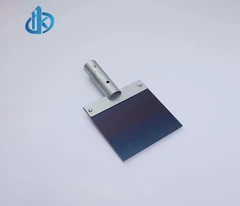

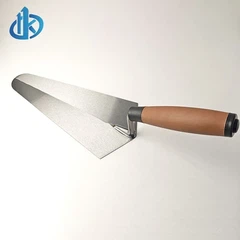


Why Are Tile Trowels Notched?
In tile installation, notched trowels are a staple tool-yet many beginners overlook a basic question: why does the blade have notches instead of a straight edge?
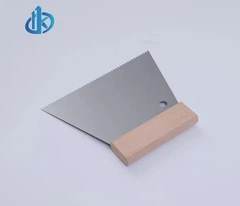
The answer lies in two essential needs: adhesive control and installation quality. The serrated edge of a notched trowel leaves uniform ridges when spreading tile adhesive. These ridges regulate adhesive thickness and create air channels when the tile is pressed down. This ensures that trapped air escapes, helping to prevent hollow spots or loose tiles. Thanks to this design, installers can achieve full and even coverage behind each tile, enhancing overall adhesion and durability.
Notch shape and size-such as square, V-shaped, or U-shaped-are not just visual differences. They correspond to tile size and adhesive type. For instance, larger tiles typically require larger notches to guarantee adequate adhesive coverage. Choosing the right notch style is critical for a successful, long-lasting tile installation.

Linyi Hanke Tools Co., Ltd., a specialized manufacturer of tile tools, has years of experience serving professional contractors and distributors. Its stainless steel notched trowel series features precise notch shaping, flexible yet durable blades, and ergonomically designed handles-widely recognized by tiling teams both in China and abroad. With a focus on real-world usability, Hanke aims to deliver reliable tools that improve on-site efficiency and results.
Ultimately, notches aren't just a design element-they are an essential part of tiling precision. The right notch, paired with the right tool, is the foundation of every firm, lasting tile job.


