



Differences between Carpet Knives and Utility Knives: Variations in Function and Design
Among various tools, carpet knives and utility knives may seem similar, but in fact, there are numerous differences in terms of design purposes, blade shapes, and handle designs.
Design Purposes: As the name suggests, carpet knives are mainly designed for cutting soft materials like carpets. During the installation, cutting, and trimming of carpets, they can exert the advantage of precise cutting, ensuring neat carpet edges without causing damage to the underlying floor.
On the other hand, utility knives are characterized by their versatility and are widely used in various daily cutting tasks, such as opening packages, cutting paper, plastic, tape, etc. They are convenient tools commonly used in homes, offices, and workplaces.

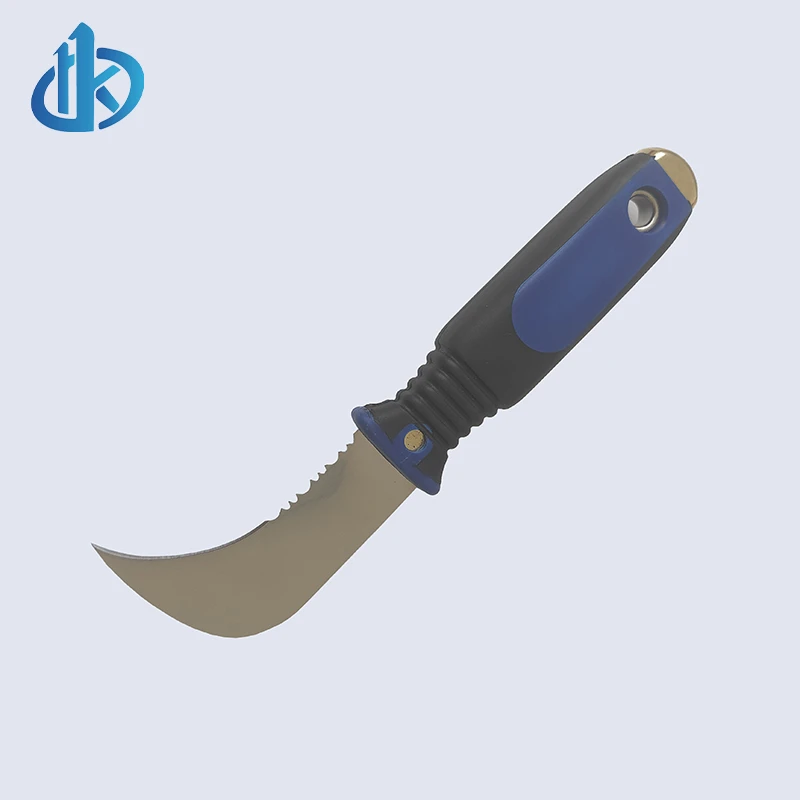
Blade Shapes: The blades of carpet knives are usually curved. This design can provide better stability and control. When cutting carpets, it is possible to cut along the predetermined line more accurately, reducing the possibility of deviation and mistakes. Moreover, the curved blades have relatively high strength and are not easily broken during the cutting process.
The blades of utility knives are generally straight. This shape is suitable for making straight cuts and can quickly and effectively handle various materials. However, when dealing with materials that require fine operations like carpets, they may not be as precise as carpet knives.
Handle Designs: To facilitate force application and operation when cutting carpets, some carpet knives adopt an angled handle. This design allows users to maintain a comfortable gripping posture when cutting in narrow spaces close to the ground or in corners, reducing hand and wrist fatigue.
The handles of utility knives are mostly straight, emphasizing versatility and comfort to adapt to different cutting scenarios and gripping methods.
In conclusion, although both carpet knives and utility knives are practical cutting tools, their respective design features and purposes determine that appropriate tools should be selected in different working scenarios to improve work efficiency and quality.


