



What is the Difference Between a Jointing Knife and a Taping Knife?
In the fields of construction and home improvement, both jointing knives and taping knives are commonly used tools. However, they exhibit significant differences in functionality, design, and application scenarios. To help everyone gain a better understanding of these two tools, our newspaper has conducted an in - depth investigation.
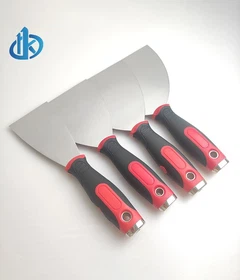
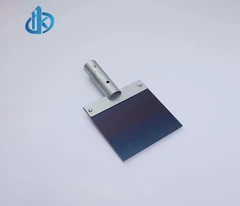
In terms of functionality, jointing knives are mainly used for handling gaps. In the construction industry, for example, in gypsum board ceiling projects, the expansion joints left between panels and between panels and surrounding walls need to be filled with elastic putty. This is where a jointing knife comes into play.
To address the issues of traditional putty knives, such as their overly wide blades that cannot reach into the joints to densely fill the elastic putty in layers, resulting in inconsistent joint - filling depths and the easy overflow and loss of elastic putty, modern jointing knives are more ingeniously designed. They can adapt to expansion joints of different widths, ensuring the density of joint filling.
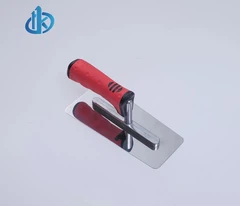
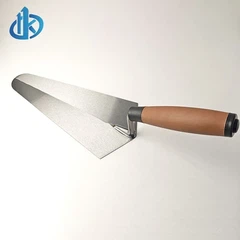
On the other hand, the taping knife, also known as a trowel, has a broader range of applications. It can evenly apply bonding materials such as cement mortar to the back of tiles, preventing the problem of hollowing. It is also suitable for tasks such as smoothing mortar and applying plaster. For instance, you can see taping knives being used in various renovation projects, including laying floor tiles, mosaic tiles, plastering walls, and tiling.

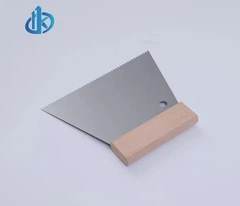
A taping knife generally consists of a blade and a handle. The blade can be made of materials such as carbon steel and stainless steel. There is a variety of blade shapes, including flat - edge taping knives and toothed taping knives.
Toothed taping knives are further divided into pointed - tooth, square - tooth, and curved - tooth types. Different blade shapes are suitable for different construction scenarios.
For example, pointed - tooth taping knives are mostly used for laying floor tiles, square - tooth taping knives are suitable for laying mosaic tiles, and curved - tooth taping knives play a role in wall - plastering projects.
Regarding application scenarios, jointing knives are focused on various scenarios that require joint filling, such as the treatment of gypsum board joints inside buildings or the filling of elastic putty in exterior wall expansion joints. The goal is to ensure that the gaps are properly filled, enhancing the structural integrity and aesthetics while preventing cracking and other issues.
The application scenarios of taping knives are much more extensive. From the tiling of indoor walls and floors to the laying of outdoor sidewalks and blind - path floor tiles, taping knives are frequently used in the entire field of construction and home improvement masonry projects. They are essential tools for ensuring the quality and effect of masonry construction.
Both jointing knives and taping knives play crucial roles in construction and home improvement projects. Construction workers and DIY enthusiasts need to carefully select the appropriate tool according to specific construction tasks to ensure the smooth progress of the project and the creation of high - quality construction results.


