
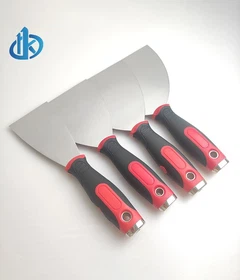
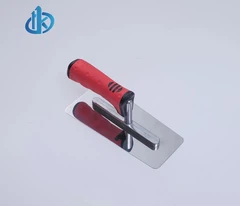
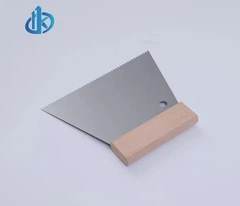
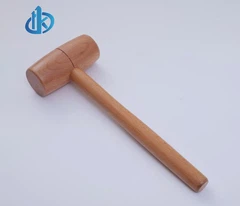


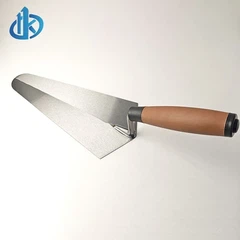

The manufacturing process of plastering trowels involves several key steps to ensure a high-quality and durable tool for various plastering applications.
It begins with the selection of raw materials. High-quality steel is typically chosen for its strength and durability. The steel is then cut into the appropriate shape and size for the trowel blade. This can be done using precision cutting machinery to ensure consistency.
Next comes the forming process. The cut steel is shaped into the characteristic curved or flat blade design of the trowel. This is often achieved through techniques like forging or stamping, which help to give the blade its desired thickness and rigidity.
After the blade is formed, it undergoes a grinding and polishing process. Grinding smooths out any rough edges and gives the blade a fine finish, while polishing further refines the surface to reduce friction and improve the trowel's performance when spreading plaster.
The handle is another important component. It is usually made from materials like wood or plastic. If it's a wooden handle, it is carefully carved and shaped to provide a comfortable grip. The handle is then attached to the blade securely, either by riveting or using other fastening methods to ensure it stays in place during use.
Finally, quality control checks are carried out to ensure that the plastering trowel meets the required standards. This includes checking for any defects in the blade, the firmness of the handle attachment, and the overall finish of the tool. Once approved, the trowels are packaged and ready to be distributed to the market for use by plasterers and DIY enthusiasts alike.


