


Picking the best wooden hammer for carpentry is a lot like picking the best pair of shoes. What works for me might not work for you-some people like sneakers, some like boots-but there are a few rules of thumb that always help. Let's start with the most important thing: the wood it's made from. No cutting corners here.
Hardwoods are non-negotiable. Softwoods like pine or cedar? They look nice, sure. But after a few uses? They'll chip, splinter, or wear down to nothing. Waste of money. The best options? Hickory, oak, and beech-those are the big three. Hickory's my personal favorite, hands down. It's tough as nails, absorbs impact really well, and has this nice, natural grip-no slipping, even if your hands are a little sweaty. Oak's a close second-super durable, but a little heavier. Great if you need a bit more force for thicker pieces of wood, like 4x4s. Beech? Perfect for beginners. Lightweight, easy to handle, and still strong enough for most carpentry tasks. I always tell newbies to start with beech-less chance of tiring out your arm, or accidentally hitting too hard.
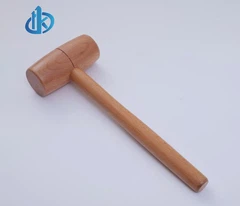
Next, size and shape-don't sleep on this. You don't want a hammer that's too big or too small. Too big? You'll struggle to control it, and you'll end up tapping places you don't want. Too small? You'll have to hit twice as hard to get anything done, which defeats the purpose. A good rule: head should be 2-3 inches wide, handle 10-12 inches long. That's the sweet spot-works for everything from fitting joints to tapping chisels. Shape? Go for a flat, round head-most versatile. You can use it for general tapping, and the flat surface means you won't leave weird, lumpy marks on the wood. Avoid anything too fancy-pointed heads, weird angles-unless you've got a specific task in mind. They're more likely to cause damage than help.
Finally, the handle-comfort is key. Look for one that's smooth but not slippery. You don't want it slipping out of your hand mid-tap-trust me, that's how you end up with a chisel in your finger (not fun). Some wooden hammers have a slight curve in the handle-game-changer if you're working for hours. It fits your hand better, so you don't get that ache in your wrist. And if you can find one with a leather grip wrapped around the handle? Even better. Adds extra comfort, keeps the handle from getting too sweaty, and looks cool too. At the end of the day, the best wooden hammer is the one that feels good in your hand. So if you can, go to a hardware store and test a few-hold 'em, swing 'em gently. You'll know the right one when you feel it.
wooden hammers from hanke tools


