
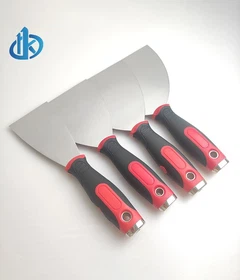
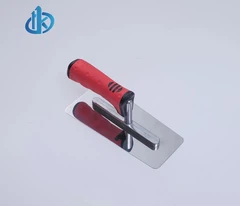
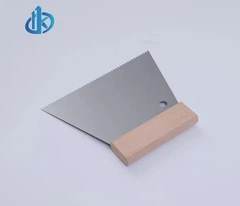
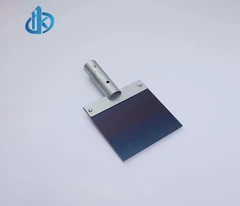

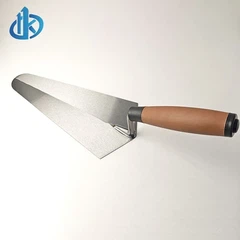

Plastering trowels, with their flat, rigid blades and ergonomic handles, are essential tools for professionals and DIYers shaping and smoothing plaster, concrete, or mortar. Here's a breakdown of who relies on them and why:
1. Plasterers and Drywall Finishers
Plasterers use trowels to apply and level plaster onto walls and ceilings, creating smooth finishes. They wield finishing trowels to compact plaster, eliminate imperfections, and achieve a polished surface. Drywall finishers also use smaller trowels to apply joint compound over seams and nail holes, feathering the compound for seamless transitions.
2. Bricklayers and Masonry Workers
Masons employ trowels to spread mortar when laying bricks, blocks, or stones. A pointing trowel helps them fill gaps between bricks with mortar, while a margin trowel ensures precise mortar application for consistent bond strength. These tools are vital for constructing durable, weather-resistant walls.
3. Concrete Workers and Cement Finishers
When pouring concrete, workers use trowels to screed (level) the surface and remove excess material. A magnesium trowel is ideal for initial smoothing, while a steel trowel creates a denser, more polished finish. They also use edging trowels to shape concrete borders and corners for clean, professional results.
4. Home Renovators and DIY Enthusiasts
DIYers tackle small-scale projects like patching holes, resurfacing damaged walls, or applying decorative plaster finishes. A handheld trowel allows them to apply plaster evenly, while a float trowel (with a rougher surface) helps create texture or grip for subsequent layers.
5. Artists and Sculptors
Some artists use specialized trowels to apply plaster or concrete in sculptural work, leveraging the tool's edge to carve textures or create geometric shapes. Decorative plasterers also use trowels to craft intricate finishes, such as Venetian plaster or stucco patterns.
6. Industrial and Construction Crews
In large-scale projects, construction teams use power trowels (motorized tools with rotating blades) to finish concrete floors efficiently. These are essential for commercial buildings, warehouses, or highways, where uniformity and durability are critical.
Key Trowel Types and Users:
Finishing Trowel: Plasterers for smooth wall finishes.
Masonry Trowel: Bricklayers for mortar application.
Concrete Trowel: Cement finishers for floor leveling.
Float Trowel: DIYers for texturing or base-layer smoothing.
Whether for functional construction or artistic expression, plastering trowels remain indispensable for anyone shaping and perfecting plaster-based materials. Their design balances precision and durability, making them a staple in various trades.


