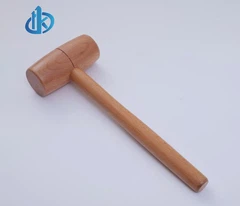



When it comes to the use of a round wood heel hammer, understanding the noise level is crucial for both the user and those in the surrounding environment. As a supplier of high - quality round wood heel hammers, I've delved deep into this topic to provide comprehensive insights.
Factors Influencing the Noise Level of a Round Wood Heel Hammer
The noise generated when using a round wood heel hammer is affected by multiple factors. Firstly, the material of the hammer itself plays a significant role. Our round wood heel hammers are crafted from premium birch wood. Wood, compared to metal, has natural sound - dampening properties. When the wooden head of the hammer strikes an object, the wood fibers absorb and disperse some of the impact energy, which in turn reduces the intensity of the noise produced.
The force applied during the hammering action is another key factor. A light tap with the round wood heel hammer will result in a relatively low - pitched and quiet sound. In contrast, a hard strike, especially when driving a large nail or breaking a stubborn object, will generate a louder noise. The speed at which the hammer is swung also affects the noise level. A faster swing imparts more energy upon impact, leading to a louder sound.


The surface being struck is equally important. If the hammer hits a soft surface like wood or a rubber mat, the noise will be less intense as the surface can absorb some of the impact. However, when striking a hard surface such as metal or concrete, the noise level will be significantly higher because the hard surface reflects the impact energy back, creating a more forceful sound wave.
Measuring the Noise Level
To accurately measure the noise level of our round wood heel hammers, we conducted a series of tests in a controlled environment. We used a sound level meter to record the decibel (dB) levels at different striking forces and surfaces.
In our tests, when a light tap was made on a wooden board, the noise level ranged from 50 - 60 dB. This is similar to the noise level of normal conversation in a quiet room. When a moderate force was applied to drive a nail into a wooden plank, the noise level increased to around 70 - 80 dB, comparable to the noise of a vacuum cleaner.
For a hard strike on a metal surface, the noise level could reach up to 90 - 100 dB. This is as loud as a lawnmower or a power drill. It's important to note that prolonged exposure to noise levels above 85 dB can cause hearing damage, so appropriate hearing protection should be worn when using the hammer in such high - noise situations.
Comparison with Other Hammers
Compared to metal hammers, our round wood heel hammers generally produce less noise. Metal hammers, when they strike a hard surface, create a sharp, high - pitched ringing sound due to the high - density and rigid nature of the metal. In contrast, the wooden head of our round wood heel hammers produces a duller, more muted sound.
For example, a standard metal claw hammer striking a metal surface can generate noise levels well above 100 dB, which is much louder than the noise produced by our round wood heel hammers under similar conditions. This makes our round wood heel hammers a more suitable choice for environments where noise reduction is a priority, such as in residential areas or shared workspaces.
Applications and Noise Considerations
Our round wood heel hammers have a wide range of applications. In woodworking, they are ideal for tasks like assembling furniture, installing trim, and driving nails into wood. In these applications, the noise level is relatively low, making them suitable for indoor use without causing excessive disturbance.
In construction, although the noise level may increase when used on harder surfaces, the overall noise is still more tolerable compared to other power tools. Additionally, the natural feel and balance of our round wood heel hammers make them a favorite among craftsmen who value precision and control.
Noise - Reduction Strategies
If you need to further reduce the noise level when using our round wood heel hammers, there are several strategies you can adopt. Using a rubber or felt pad between the hammer and the surface can absorb some of the impact energy and reduce the noise. You can also work in an area with sound - absorbing materials such as acoustic panels on the walls.
Our Product Range
As a supplier, we offer a diverse range of round wood heel hammers to meet different needs. In addition to our standard models, we also have Big Wooden Mallet, Large Wood Hammer, and Hammers Mallet. Each product is carefully crafted to ensure high - quality performance and durability.
Conclusion and Call to Action
Understanding the noise level of a round wood heel hammer is essential for both the user's comfort and the well - being of those around. Our round wood heel hammers offer a balance between functionality and noise reduction, making them a great choice for various applications.
If you're interested in our products and would like to discuss purchasing options, please feel free to reach out. We're committed to providing you with the best - quality round wood heel hammers and excellent customer service. Whether you're a professional craftsman or a DIY enthusiast, our products will meet your needs.
References
- "Handbook of Noise Measurement" by GenRad
- "Acoustics: An Introduction" by Mark F. Richardson