


When it comes to household cleaning and maintenance, one often wonders about the versatility of common tools. Among these tools, the putty knife stands out as a seemingly simple yet potentially multi - purpose item. The question at hand is: Can a putty knife be used for removing grease from surfaces? As a putty knife supplier, I've had the opportunity to explore this question in depth, and I'm excited to share my findings with you.
The Basics of a Putty Knife
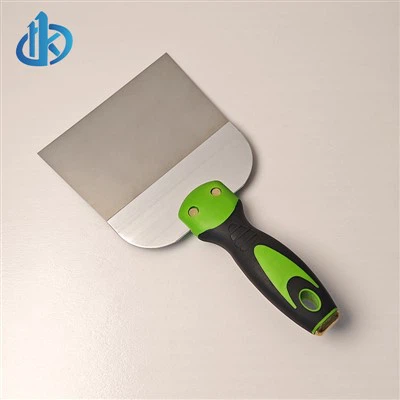
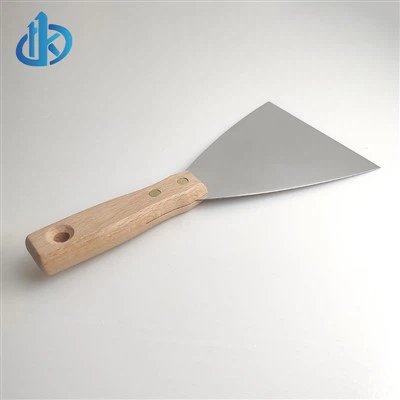
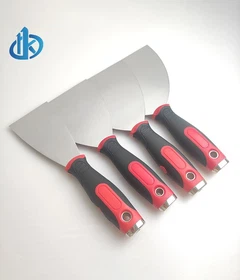
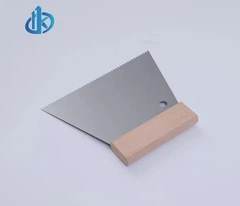
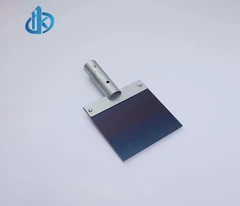
Before delving into its grease - removing capabilities, let's understand what a putty knife is. A putty knife is a hand tool with a flat, flexible blade, typically made of metal. It comes in various sizes and shapes, from small Mini Putty Knife ideal for detailed work to larger ones like those in a Drywall Knife Set. The blade's flexibility allows it to conform to different surfaces, making it useful for a range of tasks, primarily in construction and DIY projects such as applying and smoothing putty, spackle, or caulk.


Grease: A Common Household Nuisance
Grease is a sticky, oily substance that can accumulate on various surfaces in our homes, especially in the kitchen. It's not only unsightly but can also attract dirt and bacteria. Grease can be particularly stubborn to remove, as it tends to bond well with surfaces, whether they are countertops, stovetops, or kitchen appliances. Traditional cleaning methods often involve the use of chemical cleaners, scrubbing pads, and a lot of elbow grease. But could a putty knife offer a more efficient solution?
The Science Behind Using a Putty Knife for Grease Removal
To understand if a putty knife can be used for removing grease, we need to consider the physical properties of both the grease and the putty knife. Grease is a viscous fluid that adheres to surfaces through intermolecular forces. A putty knife, with its flat and sharp blade, can be used to break these intermolecular bonds by physically scraping the grease off the surface.
The flexibility of the putty knife blade is also an advantage. It can be adjusted to fit the contours of different surfaces, ensuring that all the grease is removed. For example, on a curved stovetop burner, a flexible putty knife can be bent to follow the curve, reaching areas that a rigid scraper might miss.
Practical Considerations
However, using a putty knife for grease removal is not without its challenges. First, the surface must be suitable for scraping. Soft or delicate surfaces such as painted wood or plastic may be easily scratched by a putty knife. In such cases, it's advisable to test the putty knife on a small, inconspicuous area first.
Second, the type of putty knife matters. A dull blade may not be effective in removing the grease, while a blade that is too sharp may damage the surface. For general grease removal on hard surfaces like stainless steel or ceramic, a medium - sharp blade is usually the best choice.
Step - by - Step Guide to Using a Putty Knife for Grease Removal
- Prepare the Surface: Before using the putty knife, it's a good idea to soften the grease. You can do this by applying a mild degreaser or warm, soapy water to the greasy area. Let it sit for a few minutes to loosen the grease.
- Scrape the Grease: Hold the putty knife at a low angle to the surface. Start at one end of the greasy area and gently scrape the grease towards the other end. Use short, controlled strokes to avoid damaging the surface. If the grease is particularly thick, you may need to make multiple passes.
- Clean the Knife: As you scrape, the putty knife will accumulate grease. Wipe the blade clean with a paper towel or a clean cloth regularly to maintain its effectiveness.
- Rinse the Surface: After removing the majority of the grease, rinse the surface with clean water to remove any remaining residue. You can then dry the surface with a clean towel.
Other Uses of Putty Knives
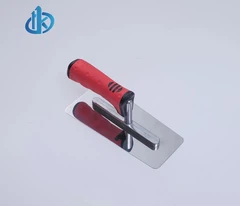
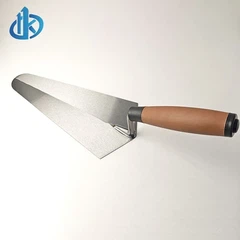
Apart from grease removal, putty knives have a wide range of applications. In construction, they are used for installing drywall, where they help in applying joint compound and smoothing it out. They are also useful for tiling work. A Margin Trowel For Tiling, which is a type of putty knife, can be used to apply thin layers of mortar to tiles and to remove excess mortar from the edges.
Advantages of Using Our Putty Knives for Grease Removal
As a putty knife supplier, we take pride in offering high - quality products. Our putty knives are made from premium materials that ensure durability and sharpness. The blades are carefully tempered to provide the right balance of flexibility and strength, making them ideal for grease removal.
We also offer a variety of putty knife sizes and styles to meet different needs. Whether you need a small Mini Putty Knife for detailed work or a larger blade for bigger surfaces, we have you covered.
Contact Us for Procurement
If you're interested in purchasing putty knives for grease removal or other applications, we'd love to hear from you. Our team is ready to assist you in finding the right putty knife for your specific needs. Whether you're a homeowner looking for a reliable tool for your kitchen or a contractor in need of a bulk order, we can provide you with the best products at competitive prices. Reach out to us to start the procurement process and experience the difference our putty knives can make.
References
- "Hand Tools: Selection, Use, and Maintenance" by Robert W. Smith.
- "The Chemistry of Cleaning" by Mary Gagliardi.