


The production of notched scrapers has undergone significant changes over time, closely intertwined with the development of technology. As a long - standing notched scraper supplier, I've witnessed these transformations firsthand, from the rudimentary tools of the past to the high - tech products of today.
Early Production Methods
In the early days, notched scrapers were often hand - crafted. Craftsmen would start with a simple piece of stone, bone, or metal. For stone notched scrapers, the process began with selecting a suitable rock, usually one with a hard and durable texture. They would then use other stones or bone tools to chip away at the edges, creating the characteristic notches. This was a painstaking process that required a great deal of skill and patience. The resulting scrapers were relatively crude but served their purpose well in tasks such as preparing hides, scraping wood, or even as basic cutting tools.
Bone notched scrapers were also common. Bones were readily available and could be shaped using similar chipping and grinding techniques. They were often more flexible than stone scrapers and were used in more delicate tasks. Metal notched scrapers, which came later in history, were forged by heating metal in a fire and then hammering it into the desired shape. This required specialized knowledge of metallurgy and the use of basic forging tools. These early metal scrapers were a significant improvement over their stone and bone counterparts, as they were stronger and more durable.
Industrial Revolution and the First Wave of Change
The Industrial Revolution marked a turning point in the production of notched scrapers. With the invention of machinery, mass - production became possible. Factories were equipped with steam - powered or water - powered machines that could cut, shape, and notch metal more efficiently than any human craftsman. This led to a significant increase in the production volume of notched scrapers.
The use of standardized molds and dies also became prevalent during this time. Instead of individually shaping each scraper, manufacturers could produce multiple identical scrapers using a single mold. This not only increased efficiency but also improved the quality and consistency of the products. For example, the teeth on the notches became more uniform, which made the scrapers more effective in their intended tasks.
The materials used in production also started to diversify. While iron was still a popular choice, steel began to gain popularity due to its superior strength and corrosion resistance. Steel notched scrapers could be heat - treated to further enhance their hardness and durability. This made them suitable for a wider range of applications, from heavy - duty construction work to fine - detail woodworking.
The Rise of Modern Manufacturing Technologies
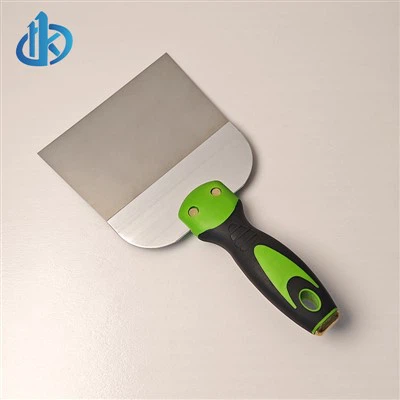
In recent decades, modern manufacturing technologies have revolutionized the production of notched scrapers. Computer - Numerical - Control (CNC) machining has become the norm in many manufacturing facilities. CNC machines are programmed to precisely cut, shape, and notch the scrapers with a high degree of accuracy. This technology allows for the production of scrapers with complex geometries and very fine notches that were previously impossible to achieve.
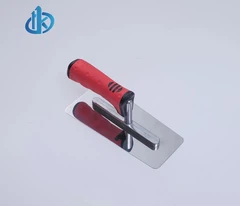
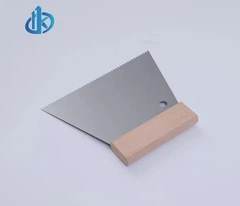
For instance, a 10mm Notched Trowel can be manufactured with extremely precise notch dimensions, ensuring consistent performance in tile - laying and other applications. The use of CNC machining also reduces waste, as the machines can optimize the use of raw materials.
Additive manufacturing, or 3D printing, has also started to make its mark in the production of notched scrapers. This technology allows for the creation of custom - designed scrapers with unique shapes and features. For example, if a customer has a specific application that requires a scraper with a non - standard notch pattern, 3D printing can produce a prototype quickly and cost - effectively. It also enables the use of advanced materials, such as high - performance polymers or composite materials, which can offer properties like lightweight, high strength, and chemical resistance.
Impact of Technology on Design and Functionality
The development of technology has not only changed the production process but also the design and functionality of notched scrapers. In the past, the design of scrapers was largely limited by the available manufacturing techniques. Today, designers have more freedom to create innovative designs that enhance the performance of the scrapers.
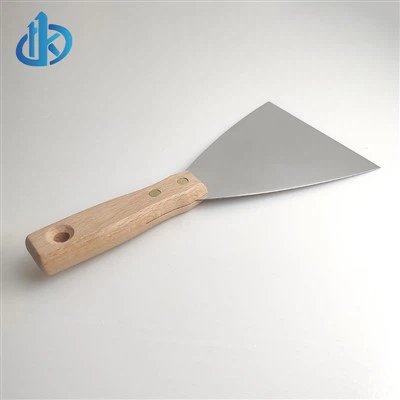
For example, the ergonomics of notched scrapers have improved significantly. Modern scrapers often feature handles that are designed to fit comfortably in the hand, reducing fatigue during prolonged use. A Scraper With Wooden Handle combines the traditional feel of wood with modern manufacturing techniques to provide a comfortable and effective tool.
The functionality of notched scrapers has also expanded. They are now used in a wide range of industries, from construction and woodworking to automotive and aerospace. Stainless steel notched scrapers, such as the ones available at Stainless Steel Notched Scraper, are highly resistant to corrosion and are suitable for use in harsh environments, such as marine applications.
Environmental Considerations
As technology has advanced, there has also been a growing emphasis on environmental sustainability in the production of notched scrapers. Manufacturers are now looking for ways to reduce their environmental impact by using recycled materials and more energy - efficient production processes. For example, some companies are using recycled steel in the production of their scrapers, which reduces the demand for virgin materials and conserves natural resources.
In addition, modern manufacturing technologies are generally more energy - efficient than their predecessors. CNC machines, for example, can be programmed to use only the necessary amount of energy to complete a task, reducing overall energy consumption.


Looking to the Future
The future of notched scraper production looks promising, with continued advancements in technology. We can expect to see even more precise and efficient manufacturing processes, as well as the development of new materials with enhanced properties. Nanotechnology may play a role in creating scrapers with self - cleaning or anti - microbial surfaces, which would be beneficial in applications such as food processing or medical equipment cleaning.
Artificial intelligence and machine learning could also be integrated into the production process to optimize quality control and predict maintenance needs. This would ensure that the scrapers produced are of the highest quality and have a longer service life.
Contact for Procurement
If you are interested in learning more about our wide range of notched scrapers or would like to discuss a custom - made solution for your specific needs, we invite you to reach out. Our team of experts is ready to assist you in finding the perfect notched scraper for your application. Whether you are a small - scale contractor or a large - scale industrial user, we have the products and the knowledge to meet your requirements.
References
- "History of Hand Tools" by Henry C. Mercer. This book provides a comprehensive overview of the evolution of hand tools, including notched scrapers, from ancient times to the modern era.
- "Manufacturing Technology: Metal Cutting and Machine Tools" by Kalpakjian and Schmid. It offers in - depth knowledge about modern manufacturing processes and how they have impacted the production of various tools, including notched scrapers.
- Industry reports from leading manufacturing research firms, which provide up - to - date information on the latest trends and technologies in the production of notched scrapers.